Criminal Justice Committee
Legacy report of the Criminal Justice Committee, Session 6
INTRODUCTION
This report is directed to the successor committee to the Criminal Justice Committee in session 7.
The purpose of the report is to assist the new committee as it comes to develop its programme of work.
The report records the main pieces of work undertaken by the Criminal Justice Committee in session 6. The report also highlights issues that are likely to merit scrutiny in the new session. Furthermore, it makes observations about ways of working that we have found useful and that our successor committee may wish to adopt.
OVERVIEW OF SESSION 6
Session 6 began in 2021, at a time when COVID restrictions meant that virtual attendance at committee meetings was commonplace and social distancing was still practised. It also meant that much of our early work was based on scrutinising how the justice system could continue to function.
One of the main themes for the rest of this session has been how the justice system has recovered from the pandemic. This has involved adapting to new ways of working, as well as dealing with the significant backlog in trials due to the pandemic.
There have been a number of other challenges in the justice sector this session which the Committee has examined, including issues such as rising prisoner numbers, reform of the jury system, violence against women and girls, and budgetary pressures.
All this has meant that the Committee has had a busy workload this session, both in terms of legislation and in scrutinising key issues of significance in its remit.
Our workload is illustrated by the fact that this session the Criminal Justice Committee has:
Held 169 formal committee meetings
Heard from 654 witnesses at formal committee meetings
Met formally for 495 hours
Received 1,378 written submissions in response to calls for views on Citizen Space
It is also the case that individual pieces of work considered by the Committee have, on occasion, been substantial.
As an example, the Victims, Witnesses and Justice Reform (Scotland) Bill was a substantial and important piece of legislation. Our scrutiny involved 14 public oral evidence sessions over the course of 36 hours. We heard from 57 different witnesses.
We would also observe that some legislation which, on the face of it, seemed fairly uncontentious, contained elements which were more complex than anticipated. For example, the provisions of both the Bail and Release from Custody (Scotland) Bill and the Fireworks and Pyrotechnic Articles (Scotland) Bill required careful analysis and scrutiny due to their policy implications.
As in previous sessions, the work of the Committee has been dominated by, mostly government, legislation. This has meant that we have had limited time to schedule self-generated or inquiry work. On occasion this has been challenging, and we have had to be flexible regarding scheduling our own inquiry work.
One development which has assisted us, to an extent, this session has been the separation of criminal and civil justice into the remits of two different committees. This has meant that legislation which in previous sessions might have been considered by this committee, such as reform of the legal profession, was considered by the Equalities, Human Rights and Civil Justice Committee. It meant, however, a disconnect between scrutiny of the civil and criminal segments of the justice system.
It remains to be seen whether this split will be replicated in session 7. If it is not, our successor committee may wish to refer to the relevant sections of the legacy report of Equalities, Human Rights and Civil Justice Committee covering civil justice matters in terms of its recommendations on what issues to pursue in session 7.
We discuss our ways of working later in this legacy report, including how we responded to the challenges of a heavy legislative workload.
MAIN WORK UNDERTAKEN DURING SESSION 6
We set out below a summary of the main pieces of work undertaken by the Criminal Justice Committee in session 6.
This is not a full description of the scrutiny we undertook, rather an indication of the key pieces of work we undertook to give an overview of our work. A more detailed description of the Committee's work this session can be found in each of our annual reports.
We would draw the attention of our successor committee to the potential for the Committee to affect change through its work and to raise the profile of an issue. To take just two examples, changes were made to the Victims, Witnesses and Justice Reform (Scotland) Bill as a direct result of recommendations made in the Committee's Stage 1 report. Furthermore, the Committee's ongoing interest in the issue of survivors of sexual offences gaining access to court transcripts without being charged excessive fees, eventually led to a change in the law in this area.
Primary legislation
The Committee has been involved in the consideration of 10 bills this session, listed below in chronological order with bills the Committee considered as a lead committee first.
| Bill | Main purpose | Committee involvement |
|---|---|---|
| Fireworks and Pyrotechnic Articles (Scotland) Bill | To restrict the supply and use of certain kinds of fireworks and pyrotechnic articles. An example of a pyrotechnic article would be a distress flare. |
|
| Bail and Release from Custody (Scotland) Bill | To change the law in two main areas:
|
|
| Victims, Witnesses, and Justice Reform (Scotland) Bill | A wide-ranging bill to:
|
|
| Criminal Justice Modernisation and Abusive Domestic Behaviour Reviews (Scotland) Bill | To make changes in relation to procedures in criminal courts, and to introduce a process for reviewing deaths which relate to abusive behaviour within relationships |
|
| Police (Ethics, Conduct and Scrutiny) (Scotland) Bill | To require the police to have a code of ethics, make changes relating to the handling of police conduct, increase the functions of the Police Investigations and Review Commissioner and introduce an advisory board for the Commissioner |
|
| Prostitution (Offences and Support) (Scotland) Bill | To creates a new offence of paying for sexual acts.To repeal the existing offence under section 46 of the Civic Government (Scotland) Act 1982 of soliciting and importuning by prostitutes. People who have been convicted of this offence in the past would have their convictions quashed. To create a requirement for Scottish Ministers to ensure that a person who is, or has been, in prostitution is provided with help and support. |
|
| Prevention of Domestic Abuse (Scotland) Bill | To introduce several measures that aim to reduce incidences of domestic abuse in Scotland. |
|
| Coronavirus (Recovery and Reform) (Scotland) Bill | To embed reforms in Scotland's public services, introduced during the Coronavirus pandemic and deemed to be beneficial.To give Scottish Ministers powers to allow them to build resilience against future public health threats.To support the justice system by extending some temporary changes because of the impact of the pandemic. |
|
| National Care Service (Scotland) Bill | (As introduced) to establish the National Care Service.To allow Scottish Ministers to transfer social care responsibility from local authorities to a new, national service. This could include adult and children's services, as well as areas such as justice social work. Scottish Ministers will also be able to transfer healthcare functions from the NHS to the National Care Service. |
|
| Children (Care and Justice) (Scotland) Bill | To make changes to the law in relation to the care of children and the involvement of children in the criminal justice system |
|
Post-legislative scrutiny
In 2023, the Committee conducted post-legislative scrutiny of the Domestic Abuse (Scotland) Act 2018.
The Committee published a report which reviewed how the Act has been implemented and made recommendations for how to overcome various challenges which the Committee had identified.
Subordinate legislation
This session the Committee considered 87 statutory instruments, 53 of which were negative instruments and 34 of which were affirmative.
Several of the statutory instruments dealt with high profile subjects and were subject to detailed committee scrutiny. To take just two examples, the Committee considered an SSI which criminalised the possession of an XL Bully dog unless an exception exists; and considered an instrument which made provision for the Scottish Ministers to release certain categories of persons early from prison and young offenders institutions.
Legislative Consent Memorandums
This session the Committee considered legislative consent memorandums in relation to nine different UK Bills and made recommendations to Parliament on whether to consent that devolved provisions should be included in the Bill. These were, in chronological order:
Online Safety Bill
Northern Ireland Troubles (Legacy and Reconciliation) Bill
Public Order Bill
Economic Crime and Corporate Transparency Bill
Investigatory Powers Amendment Bill
Criminal Justice Bill
Crime and Policing Bill
Sentencing Bill
Northern Ireland Troubles Bill
Inquiries and other scrutiny work
The Committee has undertaken inquiry and scrutiny work during this session on the following subjects. This is a summary of our work. Full details can be found in the committee's annual report and in the relevant reports and committee papers.
| Subject | Detail |
|---|---|
| Policing and mental health | A key area of scrutiny this session has been the police response in Scotland to dealing with vulnerable people, including people in mental health crisis or responding to mental-health related incidents. This scrutiny has included looking at the increased demand this work is having on police resources, as well as considering how this might be more appropriately supported by other public services, such as the NHS or social work. The Committee has also examined how Police Scotland and the Scottish Police Authority support the mental health and welfare of police officers and police staff to ensure their well-being as employees. |
| Harm caused by substance misuse in Scottish Prisons | In 2025, the Committee held an inquiry into the harm caused by substance misuse in Scotland's prisons. The inquiry sought to provide an evidence-based assessment of the extent and pattern of substance use in custody; the drivers of demand; the effectiveness of prevention, healthcare, treatment and recovery services; the impact on safety and staff wellbeing; and whether current governance, accountability and data arrangements support effective oversight. In 2026, the Committee published a report on the inquiry and subsequently held a Chamber debate. |
| Violence against women and girls | The Committee had an ongoing interest this session on domestic abuse, gender-based violence and sexual offences. In particular, the Committee took evidence from the Lord Advocate, the Scottish Courts and Tribunals Service and others about how to improve the experience of women and girls in the criminal justice system. |
| Current challenges facing the Scottish Fire and Rescue Service | The Committee has maintained an ongoing interest this session in the challenges facing the Scottish Fire and Rescue Service (SFRS), including its planned reforms and the implications of its budget settlement. |
| Impact of Brexit on policing and judicial co-operation: research | As part of its efforts to scrutinise what impact the UK's exit from the EU has had on policing and judicial co-operation between Scotland and the EU, the Committee commissioned two academics to undertake research on this topic as part of the Scottish Parliament Academic Fellowship. |
| Cybercrime | In 2025, the Committee took written and oral evidence from a number of witnesses on the issue of cybercrime and cyber security. The focus of this work was to help inform parliamentary debate and raise awareness of the impact of cybercrime and cyber-security. |
| Non-fatal strangulation | The Committee has had on-going interest in the issue of non-fatal strangulation, and whether the current laws in Scotland were adequate to address concerns, and sought written and oral evidence on this subject. |
| Provision of court transcripts | This session the Committee pursued the specific issue of survivors of rape and sexual offences gaining access to court transcripts without fees. This led to a pilot scheme to enable survivors of rape to have access to transcripts from their court cases and ultimately legislation enshrining a new right to access transcripts. |
| Climate change | The Committee has scrutinised the efforts of key justice organisations to meet commitments under Scotland's climate change targets. The Committee provided the Net Zero, Energy and Transport Committee with a summary of the evidence received during our pre-budget scrutiny sessions and through written correspondence, along with the resulting conclusions and recommendations from our pre-budget scrutiny report. |
| Cross-committee work on drugs | This session the Criminal Justice Committee, the Health, Social Care and Sport Committee and the Social Justice and Social Security Committee met jointly as part of their collaborative scrutiny of the efforts to reduce the rate of drugs deaths in Scotland and to tackle problem drug use. |
Annual budget scrutiny
Each autumn, the Committee undertook pre-budget scrutiny in advance of the publication of the Scottish Government's budget. During this scrutiny, our focus was primarily on the financial pressures facing organisations in the criminal justice sector and the main priorities for the sector.
Of particular interest to the Committee has been the pressure on capital budgets and investment in policing, the fire and rescue services, prisons, courts, community justice, criminal social work and the third sector.
In the final year of the parliamentary session, we found it particularly useful to invite in key organisations within the remit to discuss the implications to them of the actual budget settlement they received.
Scrutiny of office holders
This session the Committee has taken evidence from, and scrutinised the work of, officeholders and commissioners established by legislation which are accountable to the Scottish Parliament or whose work is of interest to the committee.
We have taken evidence from the following individuals and bodies: the Scottish Biometrics Commissioner; the Police, Investigations and Review Commissioner; HM Fire Service Inspectorate in Scotland; HM Inspectorate of Prisons for Scotland; HM Inspectorate of Constabulary in Scotland; and HM Inspectorate of Prosecution in Scotland.
Petitions
The Committee has considered three petitions this session. Further details can be found in the Committee's annual report.
Petition PE1370 (first introduced in November 2010) – is a petition by Dr Jim Swire, Professor Robert Black QC, Mr Robert Forrester, Father Patrick Keegans and Mr Iain McKie on behalf of Justice for Megrahi on opening an independent inquiry into the 2001 Kamp van Zeist conviction of Abdelbaset Ali Mohmed al-Megrahi for the bombing of Pan Am flight 103 in December 1988.
Petition PE1458 (first introduced in December 2012) – is a petition by Peter Cherbi calling on the Scottish Parliament to urge the Scottish Government to create a Register of Pecuniary Interests of Judges Bill or amend present legislation to require all members of the Judiciary in Scotland to submit their interests and hospitality received to a publicly available Register of Interests.
Petition PE2136 (first introduced in January 2025) – is a petition in the name of Fiona Drouet to make non-fatal strangulation a standalone criminal offence in Scotland.
The Committee has agreed to keep these petitions open for consideration in session 7.
ENGAGEMENT ACTIVITIES
In session 6, the Committee undertook extensive engagement work with individuals and communities, in order to encourage them to become involved in the work of the Committee and to provide their views on issues we were considering, based on their lived experiences.
Here are some examples of engagement work we undertook. Specific details of this work can be found in each of our annual reports and in committee papers and reports on each individual piece of work.
| Examples of engagement |
|---|
| Informal evidence from current and former police officers on Police Scotland support in relation to their mental health and wellbeing |
| Fact-finding visit to Blackburn in West Lothian to meet with members of the Blackburn Bonfire Night Action Group to inform scrutiny of the Fireworks and Pyrotechnic Articles (Scotland) Bill |
| Informal meetings with the Shine Women's Mentoring Service and the Council of Voluntary Organisations (East Ayrshire) Ltd to discuss their work and the challenges of supporting vulnerable prisoners on their release – to inform scrutiny of the Bail and Release from Custody (Scotland) Bill |
| Informal meeting with survivors of sexual assault, domestic abuse, sexual harassment and bullying, as well as frontline practitioners |
| Extensive evidence (both formal and informal) from survivors and victims of crime during the Committee's scrutiny of the Victims, Witnesses and Justice Reform (Scotland) Bill |
| The establishment of a ‘People's Panel' for reducing drug deaths in Scotland and tackling problem drug use. The people's panel was made up of 25 individuals from across Scotland, broadly representative of the Scottish population, who worked together to scrutinise the issue and report to the Parliament. |
| Visits to see firsthand the operation of the justice sector, including visits to Scottish Courts, HMP Edinburgh, HMP & YOI Stirling, the Wise Group, Lilias Centre, Gartcosh and the Scottish Crime Campus |
| Personal evidence of individuals with lived experience as part of scrutiny of the Prostitution (Offences and Support) (Scotland) Bill |
| A series of informal and private engagement sessions with people who have lived and living experience of substance use in prison and with family members affected by imprisonment. |
Fact finding visit as part of Committee work planning

Criminal Justice Committee
Fact finding visit as part of Committee work planning
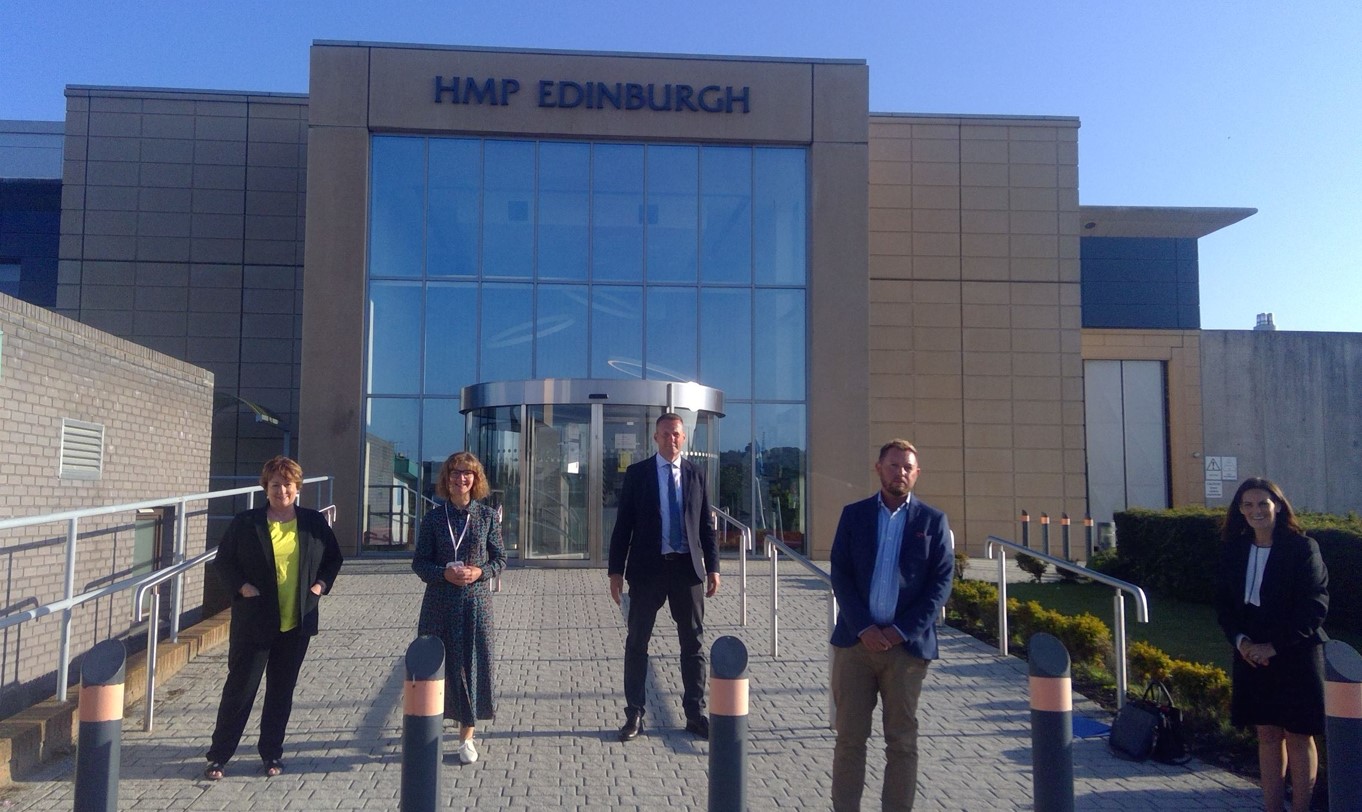
Criminal Justice Committee
Visit as part of the Committee's Stage 1 scrutiny of the Fireworks and Pyrotechnic Articles (Scotland) Bill

Criminal Justice Committee
Fact finding visit as part of Committee work planning

Criminal Justice Committee
Fact finding visit as part of Committee Stage 1 scrutiny of the Bail and Release from Custody (Scotland) Bill
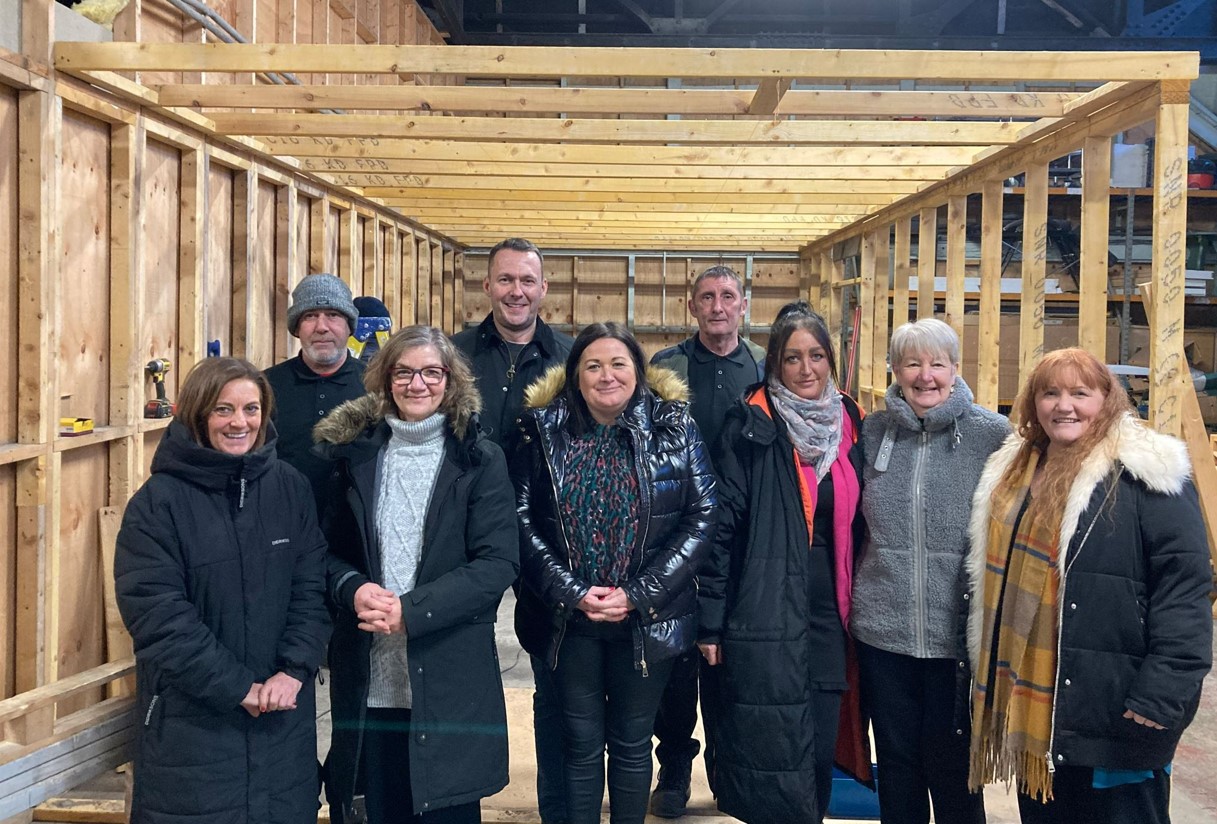
Criminal Justice Committee
Fact finding visit as part of Committee Stage 1 scrutiny of the Bail and Release from Custody (Scotland) Bill

Criminal Justice Committee
Observations on engagement
Based on our experiences this session, we offer the following observations about our engagement activities.
The Committee has found its use of engagement work to be extremely valuable this session. Hearing from individuals with lived experience of an issue can provide insights into policy areas which Members may not receive otherwise. Engagement work can inform the Committee's scrutiny, shape our recommendations and ultimately lead to policy change. It can also highlight issues which would not normally have been brought to our attention.
As an example of the impact of engagement work, the evidence from survivors of sexual offences had a significant impact in shaping our recommendations on the Victims, Witnesses and Justice Reform (Scotland) Bill. Furthermore, one of the recommendations of the People's Panel on reducing drug harm and deaths was that parliamentary committees should consider further action to look at the increase of drug supply in the prison sector. This recommendation contributed to our decision to launch our inquiry on substance misuse in the prison system.
However, there is a need to adopt a trauma-informed approach when conducting engagement. This is particularly true in the field of justice, where the Committee may be meeting with victims of crime who may have suffered trauma and be vulnerable as a result.
This session the Committee has taken care to adopt a trauma-informed approach when conducting engagement and to be guided at all times by the expertise of the Parliament's Participation and Communities Team. It is essential that enough time is allowed to prepare for an engagement event, and as far as possible that the format is designed in partnership with the participants. The format should be designed to minimise the potential for trauma. For example, private informal meetings may be more appropriate than a formal evidence session. We recommend that our successor committee adopts a trauma-informed approach to engagement to ensure that appropriate safeguards are put in place.
Given the potential for retraumatising vulnerable individuals, careful consideration should be given to the purpose of engagement before it is undertaken. Our view is that engagement activity should have a clear practical purpose and should not be tokenistic or box-ticking. It should be focused on hearing the participants’ experience of, and views on, policy issues, rather than simply inviting participants to recount traumatic experiences without any context.
It is also important to consider whether a committee could draw upon previous engagement work on a particular subject, rather than repeating work which has been done before. This would minimise the impact on individuals who may find it traumatic to provide evidence for a second time.
This session we have been careful to adopt these principles. We recommend that our successor committee does the same.
ISSUES FOR SESSION 7 / FUTURE PRIORITIES
Issues for Session 7 / Future Priorities
Below we suggest, in no particular order, some subjects which our successor committee might want to pursue in session 7. These are pieces of work which we have undertaken in session 6 which we consider are still ongoing or on which progress requires to be monitored.
| Issues for session 7 / future priorities |
|---|
| 1. Our successor committee may want to monitor the implementation of the Victims Witnesses and Justice Reform (Scotland) Act. This is a significant piece of legislation which contains major reforms to the justice system, including the establishment of a Victims and Witnesses Commissioner, setting up a new sexual offences court, the abolition of the not proven verdict and a change to the majority needed for verdicts. Our successor committee may wish to assess progress on the implementation of the various parts of the Act and monitor their effectiveness. This may include, for example, monitoring the impact of the abolition of not proven and jury changes on the operation and outcomes of trials. |
| 2. Our successor committee may want to monitor progress made in addressing the issues raised during the Committee's work on policing and mental health. Our view is that significant progress still needs to be made to address concerns about the support provided to police officers and staff in relation to their mental health. In addition, there have been concerns about the nature of the role the police are undertaking to support individuals with mental health challenges. It is still the case that too many officer hours are taken up looking after people who should be being passed over to other public sector bodies. |
| 3. Our successor committee may want to monitor the ongoing performance of the Scottish Courts and Tribunals Service when it comes to making progress in improving the experience for victims of crime and their friends/families, and in reducing the trial backlog following the COVID pandemic. Other related issues which the committee may wish to monitor include access to justice and the success of the new arrangements for digital evidence handling. |
| 4. Our successor committee may want to monitor the ongoing implications of the rising prison population in Scotland, the scale of any continuing challenges caused by Scotland's prisons being at near capacity, the implications for the justice system, and how this is being addressed by the Scottish Prison Service and the Scottish Government in the short and long term. The committee may wish to explore areas such as the impact of the early release programmes and progress on construction projects in the prison estate. Other related issues which the committee may wish to explore include the size of the remand population, and wider questions about the uses of prison in the justice system and the relative size of the prison population in Scotland compared to other countries. |
| 5. Our successor committee may want to continue monitoring the ongoing impact of the recent budget settlement on the justice sector and its implications for the activities undertaken by key bodies and longer-term investment. |
| 6. Our successor committee may want to monitor the outcome of the Scottish Fire and Rescue Service's service delivery review and what it means for how the SFRS will deliver its services throughout Scotland in the future. This will include important issues such as proposals to improve the quality of decontamination facilities across the SFRS’s estate. |
| 7. Our successor committee may want to monitor progress in implementing the provisions of the Fireworks and Pyrotechnic Articles (Scotland) Act 2022. To date, four out of six key measures provided for within the Act have been implemented including (for example) discretionary powers for local authorities to designate firework control zones. However, the implementation of restrictions to the days of supply and use of fireworks and the implementation of a licensing system for those wishing to use fireworks have been paused by the Scottish Government. Our successor committee may wish to monitor progress in implementing these outstanding provisions, as well as monitoring the effectiveness of those provisions which have been introduced. |
| 8. Our successor committee may wish to examine how the concerns about non-fatal strangulation are being addressed by the Scottish Government. The Scottish Government had published a consultation on a number of areas – including non-fatal strangulation – to help improve protection within the justice system for women and girls. Our successor committee may want to consider the results of this consultation, what action is being proposed as a result in respect of non-fatal strangulation and, more generally, how the justice system can be improved for women and girls. This includes continued scrutiny of Women's Custody Units and the issue of women on remand and serving short sentences. |
| 9. A new committee may wish to consider the progress being made by a new government to consider the issue of prostitution. This includes monitoring the work of the Independent Commission on the Criminalisation of the Purchase of Sex, details of which were announced in March 2026 following a recommendation of this Committee. A new committee may also like to look at the impact of adding sex as a hate crime characteristic and options for legislation dealing specifically with misogyny. |
| 10. Our successor committee may also like to return to the issue of the use of Orders for Lifelong Restriction (OLRs). The Committee became aware of concerns relating to access to rehabilitation programmes and progression opportunities for those serving OLRs, particularly where individuals have passed the punishment component of their sentence but remain in custody. Given wider pressures on the prison estate, figures indicated that over 270 prisoners were subject to an OLR in 2024/25, with more than 200 having passed the punishment part of their sentence. |
| 11. Our successor committee may wish to consider issues of data sharing and efficiencies in IT systems between the various arms of the justice system organisations, to ensure that processes are streamlined and designed to improve access to justice and provide a quality service which meets the requirements of users. |
| 12. Our successor committee may wish to consider maintaining a focus on issues around cybercrime and cyber-security, as more offences like fraud and theft are taking place in the digital space. Scotland's criminal justice system must have the capacity to investigate and prosecute such cybercrimes. We must also ensure that the cyber-security and resilience of criminal justice IT systems used by the police, fire service, courts, prosecution, and prison services are robust, especially as budgetary constraints means the delivery of more of their key operations via online and digital technology systems. |
| 13. Our successor committee may also wish to consider the use of Live Facial Recognition (LFR) technology by policing bodies in Scotland. While such technologies may offer potential benefits for policing and public safety, their use also raises significant issues relating to privacy, proportionality, accuracy and public confidence. Given the sensitivity of biometric technologies and the importance of maintaining public trust, our successor committee may wish to monitor developments in this area, including the legal and ethical frameworks governing any future deployment, the role of oversight bodies such as the Scottish Biometrics Commissioner, and the adequacy of existing safeguards for civil liberties and data protection. |
| 14. Our successor committee may want to consider options for undertaking post-legislative scrutiny in the area of criminal justice, given the volume and complexity of legislation in this area. Post-legislative scrutiny could involve an assessment of the extent to which particular pieces of legislation have come into force or not and, if so, whether they are having the desired policy impact. In highlighting this proposal, we note that some of the other priorities highlighted above (for example, scrutiny of the implementation of the Victims Witnesses and Justice Reform (Scotland) Act and Fireworks and Pyrotechnic Articles (Scotland) Act 2022) are forms of post-legislative scrutiny. |
| 15. Our successor committee may want to put in place arrangements for regularly scrutinising the activities of office holders within its remit, to hold them accountable for the discharging of their functions and to allow the committee to question them on key developments within their remit. A particular focus may be the Scottish Biometrics Commissioner as the only office holder in the Committee's remit directly responsible to the Scottish Parliament, with their terms and conditions of appointment and annual budget set by the SPCB. Our successor committee may also wish to consider the powers of the various inspectorates to make recommendations to their responsible bodies; the transparency of this process; and whether there is enough coherence across what the various bodies are empowered to do. |
OBSERVATIONS ON WORKING PRACTICES
Collegiate working
This session the Committee has worked in a collegiate manner, with committee colleagues establishing good and constructive working relationships. The vast majority of decisions were taken unanimously, and any differences of views were handled respectfully. The Committee benefited from a relatively stable membership with 5 out of 8 members serving for the duration of session 6 and members who joined mid-session quickly integrating into the work of the Committee. The session 7 committee should consider how this sense of collaborative working can be fostered from the start. There may be a role for a Business Planning Day off campus to assist in this regard in order to promote early relationship-building.
Early briefings from key individuals / organisations
It may be helpful to arrange initial evidence sessions immediately after the election with key individuals/organisations in the justice sector, in order to build Members’ awareness/expertise of key subjects.
Setting aside time for discussion
When conducting inquiries or scrutinising legislation, it can be helpful to set aside time for Members to discuss their work informally and in private. For example:
It can be helpful to hold private pre-meetings to discuss the Committee's approach to the formal committee meeting and which lines of questioning individual Members wish to pursue. This can help with the management of the meeting and ensure Members are well-briefed before committee meetings commence.
After evidence sessions, it can be helpful to hold a private discussion of the evidence heard, to share reflections, and to consider what further information may be required.
In advance of considering a draft report for the first time, it can be helpful to have a general open discussion about Members’ views on potential recommendations. This means that the views of Members can be obtained before a draft report is considered which helps shape the recommendations.
Achieving the most from evidence sessions
There are certain working practices which we have adopted this session which can assist in the effective management of evidence sessions. These include:
Normally dispensing with an opening statement from witnesses, on the basis that opening statements can lead witnesses to repeat the contents of their written submissions. Exceptions are made for ministers or other high-profile witnesses, such as the chief constable,
Where possible, limiting the number of panels of evidence to two per meeting, in order to ensure that adequate time is available to question witnesses. We have also found that limiting panels to no more than 4 witnesses has been beneficial.
If appropriate, providing briefing to witnesses in advance of the meeting about likely areas of questioning. This will not be appropriate in every case, but it may be helpful when a witness is inexperienced or nervous about giving evidence and the purpose of the session is to elicit certain pieces of information.
Timetabling legislation and engagement with Scottish Government
When timetabling of bills is being discussed with the Scottish Government, it is important that adequate time is available at Stage 1. This session we found there were real challenges considering the Fireworks and Pyrotechnic Articles (Scotland) Bill to a compressed timescale as requested by the Scottish Government. By contrast, the Committee had much more time to scrutinise the Victims, Witnesses and Justice Reform (Scotland) Bill and an extension to the timescale for Stage 1 was granted when requested by the Committee.
More generally, it is helpful for the Committee, and the clerking team, to establish an open dialogue with the Scottish Government with a view to receiving advance notice of work likely to be referred to the Committee. This can assist the Committee to plan its work programme, as well as allowing early notice of when there might be gaps which would allow inquiry work or one-off evidence sessions to be scheduled.
Focus on specific issues
It can be helpful for the Committee to identify a defined policy change which it wishes to be made, rather than making broad-brush recommendations. For example, the Committee highlighted a specific issue with drug smuggling in prisons through the mail received by prisoners which had been impregnated with illegal substances. This led to changes to prison rules whereby some mail would be photocopied instead. The Committee also consistently pursued the issue of survivors’ access to court transcripts and significant progress was made in this area, including securing legislative change.
This way of working also allowed the Committee to progress certain issues without necessarily needing to undertake a formal inquiry. This was helpful this session, given the limited time available for inquiry work due to other commitments such as legislation.
A degree of persistence can be required to make progress and maintain the profile of an issue. The Committee returned to the issue of court transcripts on several occasions in order to progress this issue. The Committee also returned repeatedly to the issue of mental health and policing, to monitor what progress was being made. The Committee has also returned to budget scrutiny after the publication of the Scottish Budget, to question key organisations on the implications of the budget settlement they received.
It is also the case that specific issues which warrant further work can sometimes be raised in correspondence to the Committee or in letters from constituents. Whilst the Committee is able to look into general matters of policy raised by correspondence, it has taken the long-standing position that it cannot intervene in respect of individual cases.
Members Bills
One challenge we faced this session was a requirement to scrutinise two Members Bills introduced relatively late in the final parliamentary year. This led to work programme pressures which had to be carefully managed.
We welcome the proposed rule change from the Standards, Procedures and Public Appointments Committee that the deadline for introduction of such Bills should be moved from the first sitting day in June in the calendar year preceding a general election to the first sitting day in December in the third year of a parliamentary session. We hope that this will lead to the consideration of Members Bill being spread over a wider time period, giving committees more flexibility regarding the timetabling of their scrutiny.
Cross-committee working
As noted above, several members of the Criminal Justice Committee have been meeting with their counterparts on two other committees to scrutinise the efforts to tackle the harm caused by drugs and also reduce the numbers of drugs deaths in Scotland. A legacy report from this cross committee working has been published.
We believe that this work has been important and has helped keep pressure on the Scottish Government and others to tackle this issue, and enabled parliamentary scrutiny of these efforts from a number of angles, such as the criminal justice, health and social justice aspects of tackling drug misuse and deaths.
The work has not been without challenges. Due to other commitments, it has not been possible for the cross committee to meet more frequently than a few times per year, which makes sustained scrutiny more challenging. Secondly there are challenges with the interpretation of the rules around quorums which require three members of each of the three committees taking part to all be present.
Nevertheless, we feel that there is ongoing benefit to scrutiny of efforts to tackle the harm caused by drugs and also reduce the numbers of drugs deaths in Scotland on a cross committee basis and endorse the view that some appropriate means be found for this in session 7.
CONCLUSION
As a committee, we found our predecessor's legacy report to be a useful document when we began to plan our work in 2021.
Given our experience, we recommend that our successor committee discusses this report at an early meeting following the establishment of the new committee. We wish our successor committee well as it begins its important work.